
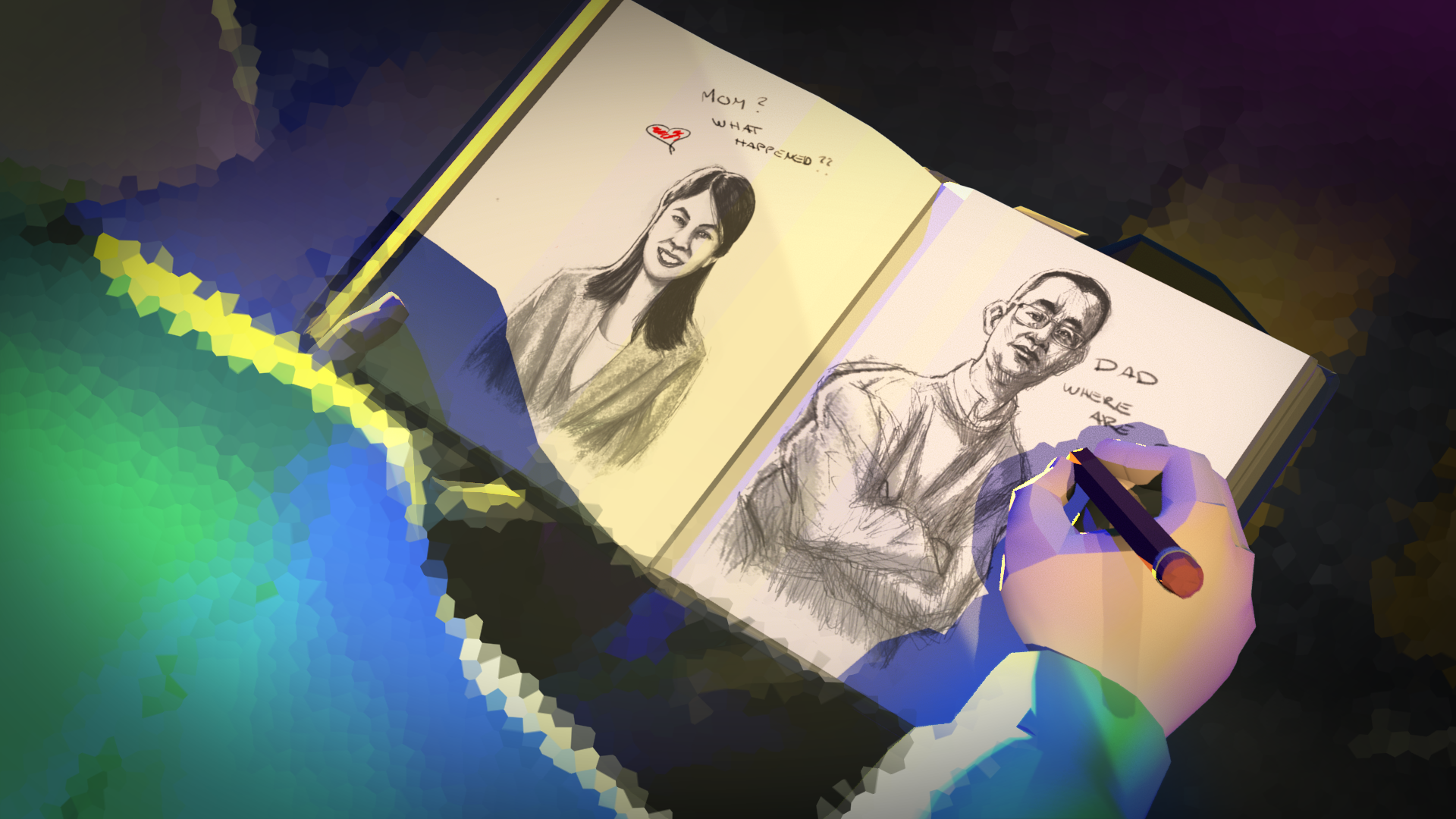
In this post, we’re exploring one of the defining features of Hope in the City—Hope’s Sketchbook, a space where thoughts, memories, and discoveries intertwine. This mechanic sits at the core of how players experience the story, turning reflection itself into a form of gameplay.
Mysteries in Hope in the City aren’t just solved—they’re understood. The Sketchbook allows players to gather fragments of information, connect ideas, and form insights that shape how the story unfolds. From the beginning, the team envisioned it as more than a menu or interface. It’s a glimpse into the protagonist’s inner world, where thoughts are fluid and connections spark new meaning.
The art direction reflects that internal space. Unlike the cinematic realism of the city, the Sketchbook’s visuals are expressive and conceptual, inspired by hand-drawn notes and layered paper textures. It’s intentionally imperfect—alive with the rhythm of Hope’s thinking, blending logic and intuition in equal measure.
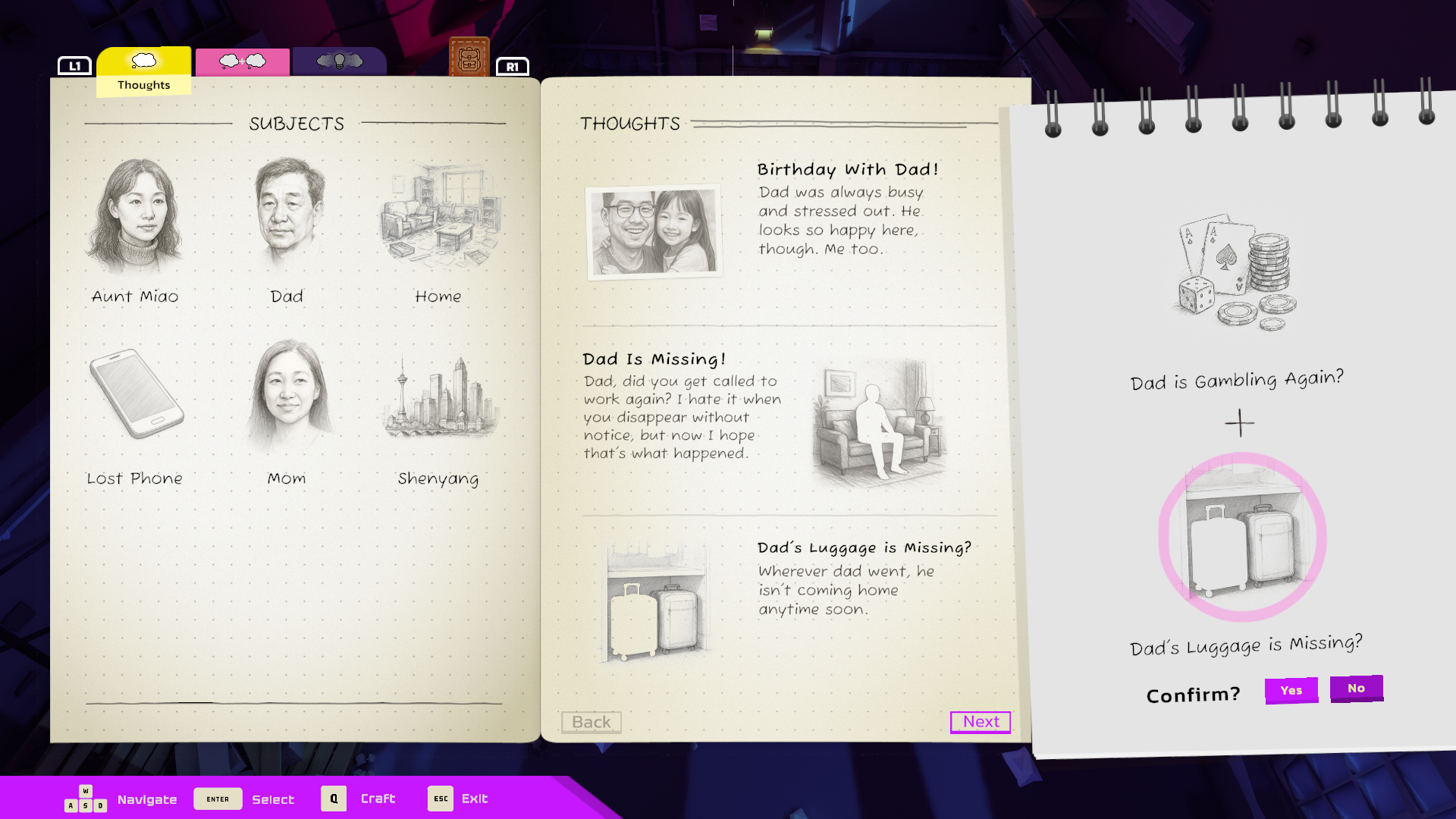
Developing the Sketchbook mechanic was about capturing the feeling of discovery through thought. As players experiment with combinations and connections, they’re embodying Hope’s process of piecing together truth from the fragments around her.
The Sketchbook continues to evolve as a defining element of Hope in the City—a living record of curiosity and insight. It represents not just how we solve mysteries, but how we come to understand ourselves along the way.
Stay tuned for more behind-the-scenes looks at the systems and stories shaping Hope in the City as development continues.